
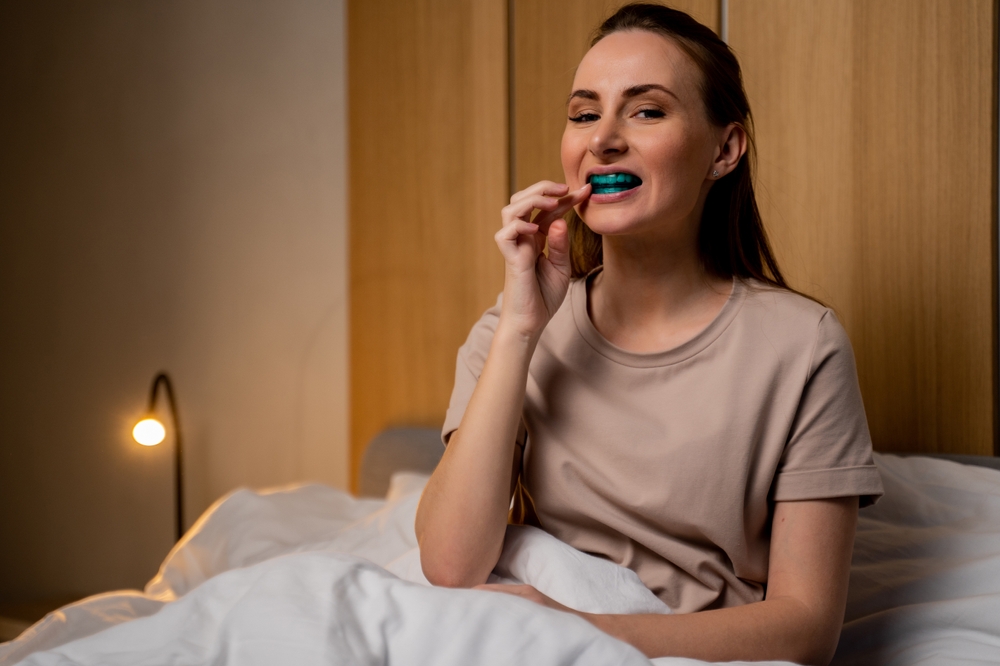
4 Types of Night Guards for TMJ (And How to Choose)
If you’re waking up with a sore jaw, tight temples, or a dull headache that seems to come from nowhere, you’re not alone. Temporomandibular joint (TMJ) disorders and nighttime teeth grinding (bruxism) affect millions of people, and one of the most effective, non-invasive ways to manage the symptoms is a night guard.
But not all night guards are created equal. Walk down the dental aisle at your local pharmacy, and you’ll find one option; ask your dentist, and you’ll hear about several more. Each type is designed for a different level of severity, bite pattern, and budget. Choosing the wrong one can mean discomfort, poor results, or even worse jaw strain than you started with.
Not sure which option fits your symptoms? Call our Miami Beach office at (305) 538-2112 or our Key West office at (305) 294-4661 to schedule a TMJ evaluation with Dr. Gutt.
Why Night Guards Help With TMJ
Before comparing types, it helps to understand what a night guard actually does. TMJ disorders often involve inflammation, muscle tension, or misalignment in the jaw joint, and this is frequently made worse by clenching or grinding your teeth while you sleep. A night guard creates a physical barrier between your upper and lower teeth. This:
- Reduces the direct impact and friction between teeth
- Helps distribute bite force more evenly across the jaw
- Can reposition the jaw slightly to relieve pressure on the joint
- Protects tooth enamel from wear caused by grinding
The right guard won’t cure TMJ on its own, but it’s often a key part of a broader treatment plan.
1. Soft Night Guards
Best for: Mild teeth grinding or clenching, and people who are new to wearing a night guard.
Soft night guards are made from a pliable, cushion-like material, similar to that used in athletic mouthguards. They’re comfortable right out of the gate and require little to no adjustment period.
Pros:
- Very comfortable, especially for first-time wearers
- Inexpensive and widely available
- Good absorption of light grinding forces
Cons:
- Can actually encourage more clenching in some people, since the soft material gives your muscles something to bite into
- Wears down faster than harder materials
- Not ideal for moderate to severe TMJ symptoms or heavy grinders
Soft guards are a reasonable starting point for mild cases, but they’re rarely the long-term solution for someone with diagnosed TMJ dysfunction.
2. Hard (Rigid) Night Guards
Best for: Moderate to severe grinding and clenching.
Hard night guards are made from a rigid acrylic material. Unlike soft guards, they don’t compress under pressure, which means they hold up much better against forceful grinding and don’t invite additional clenching.
Pros:
- Extremely durable
- Effective for heavy grinders
- Long lifespan with proper care
Cons:
- Can feel bulky or uncomfortable at first
- Typically requires a custom fit from a dental professional to avoid worsening jaw alignment
- Higher upfront cost than soft guards
If you have moderate to severe TMJ symptoms, a hard guard is often more effective than a soft one, but a poor fit can create new problems, so this is not a good candidate for an over-the-counter, one-size-fits-all product.
Considering a hard guard? A custom fit matters. Reach us at (305) 538-2112 (Miami Beach) or (305) 294-4661 (Key West), and we’ll make sure yours is fitted correctly from the start.
3. Dual-Laminate (Hybrid) Night Guards
Best for: People who need durability but also want more cushioning and comfort.
Dual-laminate guards combine a soft inner layer with a hard outer shell. You get the shock absorption of a soft guard with the strength and grinding resistance of a hard guard.
Pros:
- Balances comfort and durability
- Well-suited for moderate grinders who find hard guards too harsh
- Custom-fitted for a more secure, stable feel
Cons:
- More expensive than single-material guards
- Slightly bulkier than a purely hard guard
This style is a popular middle-ground option and is frequently recommended by dental professionals for patients who tried a soft guard and found it wasn’t holding up.
4. Custom TMJ Splints (Occlusal Splints)
Best for: Diagnosed TMJ disorders where jaw alignment, not just grinding, is part of the problem.
This is where night guards cross over into true TMJ therapy. Custom splints, sometimes called occlusal splints, bite splints, or orthotics, are designed by a dentist or periodontist specifically to correct how your jaw sits and functions, not just to protect your teeth from grinding.
Types of splints include:
- Stabilization splints, which create an even bite surface to reduce muscle tension
- Anterior repositioning splints, which guide the jaw into a more favorable position relative to the joint
- NTI-tss devices, small splints that cover only the front teeth to reduce the intensity of clenching
Pros:
- Designed around your specific bite, jaw alignment, and TMJ symptoms
- Can address the underlying mechanical cause of TMJ pain, not just the symptom of grinding
- Adjustable over time as your treatment progresses
Cons:
- Requires a professional evaluation, imaging, and fitting
- Higher cost than store-bought options
- May take a short adjustment period as your jaw responds to the new alignment
For patients with ongoing jaw pain, clicking or popping, limited range of motion, or headaches linked to TMJ dysfunction, a custom splint is typically the most effective option because it treats the joint itself, not just the teeth.
Ready for a custom oral appliance? Dr. Gutt offers comprehensive TMJ evaluations to determine the right splint for your jaw and bite. Call (305) 538-2112 for our Miami Beach office or (305) 294-4661 for our Key West office to get started.
How to Choose the Right Night Guard
Here are a few questions worth asking as you weigh your options:
How severe are your symptoms?
Occasional mild clenching may respond well to a soft guard. Frequent jaw pain, clicking, or morning headaches point toward a hard guard or custom splint.
Have you been diagnosed with TMJ disorder, or are you self-diagnosing based on symptoms?
If you haven’t had a professional evaluation, that’s the right first step. TMJ pain can have several underlying causes, and treating the wrong one can delay real relief.
Have you tried an over-the-counter guard before?
If a soft or boil-and-bite guard didn’t help or made things worse, that’s usually a sign you need a custom-fitted option.
What’s your budget, and how do you weigh cost against long-term results?
Store-bought guards are cheaper upfront, but a poorly fitting guard can lead to more dental visits, more discomfort, and even worsened TMJ symptoms down the road. Custom options cost more initially but are built to solve the actual problem.
Do you have other dental or gum health concerns?
Since night guards sit against your teeth and gums for hours every night, it’s worth having them fitted or reviewed by a professional who can also check for related issues like gum recession or bite misalignment.
When to See a Dental Professional
Over-the-counter night guards can be a fine starting point for very mild, occasional grinding. But if you’re dealing with any of the following, it’s time to schedule an evaluation rather than guess:
- Jaw pain that doesn’t improve after a few weeks
- Clicking, popping, or locking of the jaw
- Frequent headaches, especially in the morning
- Worn, cracked, or sensitive teeth
- Ear pain or ringing with no other explanation
A proper diagnosis makes it possible to match the guard, or splint, to the actual cause of your symptoms instead of relying on trial and error.
The Bottom Line
Night guards range from simple, soft store-bought options to precisely fitted custom splints designed to treat TMJ disorder at its source. The right choice depends on the severity of your symptoms, whether you have a formal TMJ diagnosis, and how your jaw responds to treatment over time.
If you’re dealing with ongoing jaw pain, clenching, or grinding, the most reliable path forward is a professional evaluation. A custom-fitted guard or splint, built around your specific bite and jaw alignment, offers the best chance at lasting relief.
Schedule Your TMJ Evaluation Today
Dr. Mark I. Gutt has over three decades of experience diagnosing and treating TMJ disorders in South Florida. If jaw pain, clenching, or grinding is affecting your daily life, don’t wait to get answers. Contact our South Florida dental offices today.
Miami Beach Office: (305) 538-2112 Key West Office: (305) 294-4661