Gum Disease Symptoms Most People Miss
You brush twice a day, floss regularly, and your teeth look fine in the mirror. So everything must be okay, right? Not necessarily. Gum disease is one of the most common oral health conditions affecting adults, yet many people don’t realize they have it until it’s reached an advanced stage. The good news is that early-stage gum disease (gingivitis) is completely reversible with proper care and professional treatment. Here are seven silent warning signs that are easy to miss but important to recognize.
If you’re experiencing any of these symptoms, contact Dr. Mark Gutt’s office today. Call (305) 538-2112 for our Miami dental office location or (305) 294-4661 for Key West to schedule your appointment.
1. Bleeding Gums That You’ve Normalized
If your gums bleed when you brush or floss, you’ve probably told yourself it’s because you’re brushing too hard or haven’t flossed in a while. But here’s what your dentist wants you to know: healthy gums don’t bleed, even with vigorous brushing. Bleeding gums are one of the earliest signs of gingivitis, indicating inflammation caused by plaque buildup along the gumline.
Many people become so accustomed to seeing a little pink in the sink that they consider it normal. It’s not. If you notice bleeding during your oral care routine more than occasionally, it’s time to schedule a dental appointment before it progresses to more serious gum disease.
2. Persistent Bad Breath Despite Good Hygiene
We all experience bad breath after eating garlic or first thing in the morning. But if you have chronic bad breath that doesn’t go away with brushing, flossing, or mouthwash, your gums might be trying to tell you something. Persistent bad breath is often caused by bacteria hiding in the pockets between your gums and teeth, producing sulfur compounds that create a distinctive, unpleasant odor that lingers throughout the day.
While mouthwash can temporarily mask the smell, it won’t address the underlying bacterial infection. If you’re dealing with bad breath that won’t quit despite good oral hygiene, it’s worth getting your gums checked.
3. Receding Gums You Might Mistake for Aging
Have you noticed that your teeth look longer than they used to? Many people assume this is just a natural part of getting older, but gum recession is actually a warning sign of gum disease. When gums recede, they pull away from the teeth as inflammatory disease destroys the tissue and bone that hold your teeth in place. The exposure of tooth roots often leads to increased sensitivity to hot, cold, or sweet foods.
While some minor gum recession can occur with age or aggressive brushing, significant or rapidly progressing recession should never be ignored. If you’ve noticed your teeth looking longer or you can feel notches near your gumline, don’t dismiss it as aging—talk to your dentist right away.
4. Changes in Your Bite or Tooth Alignment
Have you noticed that your teeth don’t fit together quite the way they used to when you bite down? As gum disease progresses, it destroys the bone that supports your teeth. As this bone deteriorates, teeth can gradually shift position, creating changes in your bite alignment. You might notice that certain teeth touch before others when you close your mouth, or that there’s a new gap where teeth used to meet evenly.
These changes happen so gradually that many people adapt without realizing what’s occurring. By the time you notice bite changes, the disease has typically reached a more advanced stage, with silent bone destruction that may have progressed for months or even years.
5. Gums That Look Healthy But Feel Different
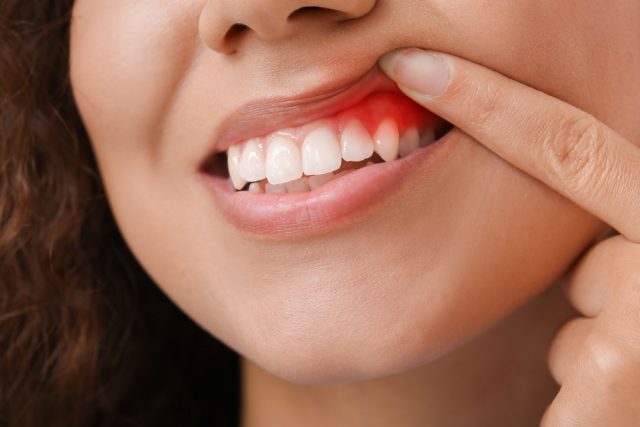
Not all warning signs of gum disease are visible. Healthy gums should feel firm and tightly attached to your teeth, but gums affected by disease often become swollen, tender, or spongy to the touch. The color changes aren’t always dramatic either. Early or moderate gum disease might show up as subtle shifts from coral pink to dusky red, or areas that look slightly shiny or puffy.
Some people also experience gums that swell and subside periodically, which can create a false sense of security. But this pattern of intermittent inflammation is itself a warning sign that shouldn’t be ignored, even if your gums seem okay some days.
6. Increased Gaps or Spaces Between Teeth
Have you started noticing food getting stuck between your teeth in places where it never used to? As gum disease causes inflammation and bone loss, teeth can begin to shift and separate, creating spaces where none existed before. This happens so gradually that you don’t notice until suddenly you’re constantly using a toothpick after meals, or food repeatedly catches in a particular spot.
In more advanced cases, teeth may become loose enough to move when you press on them. This mobility indicates significant bone loss has occurred, and if left untreated, it can eventually lead to tooth loss. If you’ve noticed new gaps developing, don’t wait for your next routine appointment.
7. No Symptoms At All
Perhaps the most insidious aspect of gum disease is that it can progress significantly without causing any pain or obvious symptoms. Many people assume that if something is seriously wrong, they’ll feel it. But gum disease doesn’t always announce itself with discomfort—the infection can destroy gum tissue and bone while you remain completely unaware.
This is particularly true for smokers, whose reduced blood flow to the gums can mask warning signs, and people with diabetes who may experience faster progression with fewer symptoms. The absence of symptoms doesn’t mean the absence of disease, which is precisely why your dentist recommends regular checkups to catch gum disease in its earliest, most treatable stages.
What To Do If You Notice These Signs
If you’ve identified one or more of these symptoms, don’t wait for your next scheduled appointment. Call your dentist and explain what you’ve noticed. During your visit, expect a thorough examination, including measurements of the pockets between your gums and teeth and possibly X-rays to assess bone loss. Based on the severity of your condition, treatment options might range from professional cleaning for early gingivitis to scaling and root planing (deep cleaning), antibiotic therapy, or surgical interventions for advanced cases. The earlier gum disease is detected, the simpler and more effective the treatment.
Gum Disease Prevention Tips
- Perfect your technique: Brush for two full minutes twice a day at a 45-degree angle to your gumline, and curve floss around each tooth in a C-shape.
- Don’t skip professional dental cleanings: Even excellent home care can’t remove all plaque and tartar. Schedule cleanings every six months.
- Use the right tools: Consider water flossers or electric toothbrushes, which often remove plaque more effectively than manual brushing.
- Quit smoking: Smoking dramatically increases your vulnerability to gum disease and makes treatment less effective.
- Eat a nutrient-rich diet: Proper nutrition supports immune function and tissue health.
- Manage stress: Chronic stress weakens your immune system and makes you more vulnerable to infections, including gum disease.
Take Control of Your Gum Health in South Florida
Gum disease doesn’t have to be an inevitable part of aging, and tooth loss doesn’t have to be your future. When caught early, gum disease is highly treatable and even reversible. Your mouth is constantly communicating with you—through bleeding, texture changes, shifting teeth, persistent bad breath, and even through the absence of symptoms. Learning to recognize these subtle signals empowers you to take action before minor issues become major problems.
If it’s been more than six months since your last dental checkup, or if you’ve noticed any of these warning signs, don’t wait. Dr. Mark Gutt and his team specialize in detecting and treating gum disease at every stage, with convenient locations to serve you. Call our Miami dental office at (305) 538-2112 or our Key West location at (305) 294-4661 to schedule your comprehensive evaluation. Early detection and treatment can save your teeth, protect your health, and give you the confidence that comes with knowing your smile is built on a healthy foundation.